
How Buyers and Sellers Can Respond to a Las Vegas Housing Slowdown
A Las Vegas housing slowdown is not automatically a crash. We explain how to read closed sales, price a home against real competition, set a buy box, evaluate an investment, and budget total ownership costs.
A Las Vegas housing slowdown does not mean a crash. It means buyers have more choices and sellers face more competition, so results depend on how a specific home is priced, what it costs to own, and what else the same money could buy.
Buyers may see more inventory but still worry about affordability and further price declines. Sellers may attract showings without receiving offers, particularly when an older home competes with updated properties or new construction. Below we explain how we would read the evidence, price a listing, set a buy box, and test an investment purchase.
Key takeaways
- A slowdown is not automatically a crash. Rising inventory and a modest price dip can happen together.
- Closed sales are the best evidence of price. Active listings and price cuts show pressure, not final values.
- Sellers should price against condition and competition, including new construction, not against their preferred proceeds.
- Buyers do better with a written buy box than with a guess at the market bottom.
- Total ownership cost decides affordability, not the asking price alone.
How to Tell Whether a Las Vegas Housing Slowdown Is Lowering Prices
More listings, longer selling periods, and price reductions can indicate weaker demand relative to supply. They do not, by themselves, establish how much completed sale prices have fallen. An overpriced home can receive a substantial asking-price reduction without selling below the value of comparable properties.
Local reporting shows why. In March, FOX5 Las Vegas reported that single-family homes listed without offers rose 19.2% year over year while the median price fell only about 1%. In August, the Las Vegas REALTORS figures put the Southern Nevada median single-family price at $475,000, down 1.0% from a year earlier and below the $490,000 record set in May and June.
For a current snapshot, Las Vegas has 7,549 homes for sale, the latest median sold price is $432,750, and homes are taking a median of 28 days to sell at 98.1% of list price. Henderson’s latest median sold price is $505,000. We track these figures in our monthly Las Vegas market stats.
A useful market review separates three kinds of evidence:
- Active listings: The alternatives available to a buyer at a particular price point.
- Pending sales: Properties that have attracted accepted offers, although final prices may not yet be available.
- Closed sales: Completed transactions that help establish what buyers have actually paid.
Those comparisons should also distinguish single-family homes from townhomes and condominiums. VEGAS INC reported that the condo and townhome median of $299,900 was up 0.6% year over year in August even as single-family prices eased. If that segment interests you, review condos in Las Vegas separately from houses.
Neighborhood and condition matter more than a broad headline
A buyer considering an older Summerlin home needs comparisons involving similar size, age, condition, and location. A valley-wide price figure cannot explain whether that property is competitive against a remodeled resale or a newly built alternative.
National headlines can also point a different way than local closings, which we unpack in national rankings versus local sales reality. Our guide to reading Zillow housing data covers the same problem from the data side.
The same principle applies to sellers. A nearby home with a similar floor plan may not be a strong pricing comparison if its kitchen, bathrooms, finishes, or overall condition are substantially different. Comparable square footage is only the beginning of a valuation comparison.
Why a Las Vegas Home Can Get Showings but No Offers
Repeated showings without offers suggest that the property is reaching prospective buyers but is not persuading them to purchase at the offered terms. Price relative to condition is a central issue to investigate, although that pattern alone does not prove a single cause.
For example, an older Summerlin resale might attract attention because its location and size match a buyer’s search. After visiting, the buyer may decide that renovation work makes an updated competing home more attractive. Additional exposure would not resolve that value gap, and we look at the broader pattern in why some homes sell fast while others sit.
A practical seller pricing review
- Identify the real competition. Compare homes in the same likely buyer budget, not just properties on nearby streets.
- Review completed sales. Separate renovated homes from dated homes rather than treating them as interchangeable.
- Include new construction. Determine whether buyers can purchase a newer property within a similar overall budget.
- Account for condition. Identify the work a buyer would reasonably consider before moving in.
- Review showing feedback. Look for repeated concerns about price, finishes, layout, or required improvements.
- Adjust the value proposition. Reconsider the asking price, preparation work, or transaction terms based on the evidence.
Strong presentation can help a property receive attention. It cannot eliminate an unfavorable comparison with competing homes. A pricing decision should reflect what the buyer receives for the money, rather than the seller’s preferred proceeds.
Sellers should also know what they would keep. The IRS explains that sellers who meet the ownership and use tests may exclude up to $250,000 of gain on a main home, or $500,000 if they file jointly. To see where your own home stands, request a free home valuation, or read how we sell your home in Las Vegas.
Why a Million-Dollar Home May Still Need Major Updating
A seven-figure asking price does not establish that a Las Vegas home is modern or move-in ready. An older, larger property may carry a substantial price while still needing changes to kitchens, bathrooms, flooring, or other finishes. Buyers can compare it with luxury homes in Summerlin to see how condition and finishes differ at the top of the market.
That creates an important distinction between purchase price and the cost of obtaining the desired condition. Buyers comparing a dated resale with a newer home should consider both the acquisition cost and the work needed afterward.
| Comparison factor | Dated resale | Newer or updated home |
|---|---|---|
| Initial price | Should be evaluated against condition and competing properties | Should be evaluated against the features actually included |
| Work after purchase | May require substantial updating | May involve less immediate updating, depending on the property |
| Space and layout | A larger footprint may be a meaningful advantage | A newer layout may better match the buyer’s preferences |
| Budget uncertainty | Renovation scope and estimates need careful review | Included features and additional purchase costs need careful review |
No universal price threshold guarantees modern design or superior condition. Each home requires its own comparison, including property-specific renovation estimates. Buyers weighing a fixer-upper against a newer build should browse new construction in Las Vegas to see what a similar budget buys.
Should Las Vegas Buyers Wait for the Market Bottom?
Waiting can be reasonable when available homes do not meet a buyer’s budget or needs. Waiting for an identifiable market bottom is a different strategy. The lowest point generally cannot be known with confidence before later transactions establish the trend.
A more practical approach sets purchase criteria in advance. That allows a buyer to recognize a suitable property without requiring a prediction about the entire Las Vegas market. The median list price across Clark County is currently $469,900, but that single figure says little about the homes that fit your needs.
Create a specific buying “buy box”
A buy box is a written set of requirements defining which properties merit serious consideration. It should distinguish essential needs from preferences and establish a financial limit.
Hypothetical Summerlin example: A buyer might require at least 1,800 square feet, three bedrooms, two bathrooms, a two-car garage, and a purchase price no higher than $500,000. Those figures illustrate a search framework, not a claim that qualifying homes are available at that price.
- Location: A specific community, ZIP code, or search boundary.
- Property type: Single-family home, townhome, or condominium.
- Essential features: Size, bedrooms, bathrooms, garage, and layout requirements.
- Condition: Move-in ready, modest updating, or substantial renovation.
- Financial ceiling: Purchase price and acceptable total ownership cost.
- Purpose: Primary residence, income-producing rental, or longer-term investment.
Once those criteria are established, buyers can monitor relevant listings and completed sales through a focused Las Vegas real estate search. You can narrow it to Summerlin homes for sale if that is your target. A property that meets the criteria deserves evaluation even if broader headlines remain uncertain.
Negotiation should follow evidence, not a desired discount
A buyer’s target price is not proof of market value. A lower offer is more defensible when supported by comparable sales, required work, competing listings, and the property’s marketing history. Scanning price-reduced homes in Las Vegas shows how sellers are adjusting.
Cash buyers should use the same discipline. Paying without financing does not remove the risk of overpaying, underestimating repairs, or buying a property that does not fit the intended use.
How Investors Should Evaluate Opportunities During a Slowdown
An investment purchase needs a different decision process from a primary residence. The investor must first identify the strategy: recurring rental income, a longer holding period, or renovation and resale. Each strategy depends on different assumptions and exposes the owner to different risks.
Cash-on-cash return measures income against invested cash
Cash-on-cash return = annual pre-tax cash flow ÷ total cash invested × 100.
Total invested cash should reflect the cash committed to the acquisition and preparation of the property, rather than only the advertised purchase price. Annual cash flow should account for operating expenses and debt service when financing is used.
Hypothetical example: If an investor commits $300,000 in total cash and receives $18,000 in annual pre-tax cash flow after expenses, the cash-on-cash return is 6%. This calculation illustrates the method and is not a statement about available Las Vegas rental returns.
An investment review should examine:
- Expected rent and evidence supporting that estimate.
- Vacancy and tenant turnover assumptions.
- Property management, maintenance, and repair expenses.
- Insurance, property taxes, and HOA charges.
- Financing costs, if applicable.
- Applicable rental restrictions.
- Funds needed for unexpected work or a longer holding period.
A buy-and-hold strategy should not depend solely on appreciation. A renovation-and-resale strategy should not assume that a finished property will command the same price as an unusually strong comparable sale. A lower acquisition price helps only when the rest of the analysis remains sound.
Do rising foreclosures mean another 2008-style crash?
A foreclosure increase deserves attention, but a percentage change or state ranking does not establish the scale of distress. A large increase from a low starting point can still represent a relatively small number of affected properties. Investors can see what distress looks like locally by reviewing bank-owned homes in Las Vegas.
Foreclosure claims need several checks before they become useful evidence:
- Identify the measure. A filing, an auction, and a completed lender repossession describe different events.
- Identify the geography. Nevada, Clark County, and Las Vegas are not interchangeable reporting areas.
- Identify the reporting period. Monthly, quarterly, and annual comparisons can produce different impressions.
- Compare rates and counts. Rankings alone do not explain the share of properties affected.
- Review a longer history. A year-over-year increase should also be placed against earlier market cycles.
Without those details, neither a precise foreclosure ranking nor a numerical comparison with 2008 should be treated as established. Rising distress may affect opportunities and risks, but it does not independently prove that the broader market will crash.
Property Taxes, Insurance, and Closing Costs Change the Affordability Math
Buyers should compare total ownership costs, not just asking prices. A home that appears affordable at the purchase-price level may be less attractive after taxes, insurance, HOA fees, utilities, maintenance, and renovation needs are included.
Nevada property-tax abatement percentages are sometimes confused with property-tax rates. They concern limits on certain annual tax-bill increases. Under the Clark County tax abatement rules, an owner-occupied primary residence has a 3% cap on annual increases, non-owner-occupied residences have a cap of up to 8%, and new construction has no cap in its first fiscal year. They do not mean that a homeowner simply pays that percentage of the purchase price each year.
Likewise, an older tax figure displayed with a listing should not automatically be treated as the future cost for that buyer. New construction requires particular care because a historical parcel bill may not represent the completed home.
A property-level review should use the parcel number, current bill, applicable classification, and any relevant assessment changes. The official Clark County website provides access to county property and tax resources. A purchase budget should use verified parcel information rather than a broad rule of thumb.
Buyers should also budget for closing costs on top of the down payment. The Consumer Financial Protection Bureau notes that closing costs typically run 2% to 5% of the purchase price.
How Economic Conditions and Water Concerns Fit Into the Decision
National indicators provide context, not a guaranteed local forecast
Mortgage rates, Treasury yields, inflation, employment, economic growth, and consumer sentiment help explain the environment in which Las Vegas buyers make decisions. Household savings and debt also matter when evaluating financial resilience.
These measures answer different questions:
- Mortgage rates and Treasury yields: Financing conditions and borrowing costs.
- Federal funds rate: Monetary-policy context, not a direct substitute for a mortgage-rate quote.
- Inflation, unemployment, and payrolls: Household purchasing power and employment conditions.
- Gross domestic product and consumer sentiment: Broader economic activity and confidence.
- Housing starts, existing-home sales, and home-price indexes: National housing activity and pricing context.
- Savings, revolving debt, and other loan balances: Financial pressures that may affect purchase readiness.
No single indicator determines the value of a Summerlin resale. National data should be paired with local inventory, comparable sales, property condition, and the buyer’s actual financing terms.
Water concerns deserve evidence rather than dismissal
Lake Mead and long-term water availability are legitimate Southern Nevada considerations. Neither an alarming headline nor an unsupported assurance about distant future supply provides a sufficient basis for a purchase decision.
Property evaluation can address the more immediate questions: landscaping, irrigation, water use, and applicable conservation requirements. Renting instead of buying may suit a household’s circumstances, but water concerns alone do not establish that every Las Vegas property is an unsuitable investment.
A Decision Checklist for Buyers and Sellers
Forecasts calling for a particular decline, recovery date, or interest-rate change should be treated as scenarios rather than promises. Purchase and sale decisions are more defensible when they work without requiring one forecast to come true.
- For buyers: Establish a buy box, verify total ownership costs, compare condition, and negotiate from property-level evidence.
- For sellers: Review competing listings and completed sales, account for updating needs, and respond to consistent feedback.
- For investors: Define the strategy, test operating assumptions, and allow for vacancy, repairs, and a longer holding period.
- For every transaction: Separate asking prices from completed sales and distinguish verified data from opinion.
The central issue is not whether the entire Las Vegas market has reached a turning point. It is whether a particular transaction remains financially practical under conditions that may change.
Frequently asked questions
Does a Las Vegas housing slowdown mean home prices are about to crash?
Why is my Las Vegas home getting showings but no offers?
Should I wait for the Las Vegas market bottom before buying a home?
How do I calculate cash-on-cash return on a Las Vegas investment property?
Do rising foreclosures mean Las Vegas is headed for another 2008-style crash?
What costs should Las Vegas buyers budget for beyond the purchase price?
Market figures in this article update automatically. Based on information from the Las Vegas REALTORS® Multiple Listing Service for the period September 1, 2026 through October 5, 2026.
Homes for sale in Las Vegas, Nevada
Thinking about a move to Las Vegas?
Browse every home for sale across the valley — Summerlin, Henderson, 55+ communities, high-rise condos, new construction and more — updated every few minutes. Or talk to a local agent who knows the neighborhoods.
Las Vegas, Nevada housing market
A quick read on what homes are doing in Las Vegas right now — pulled live from the MLS.
Based on information from the Las Vegas REALTORS® Multiple Listing Service for the period September 1, 2026 through October 5, 2026.
Keep reading
More from the blog
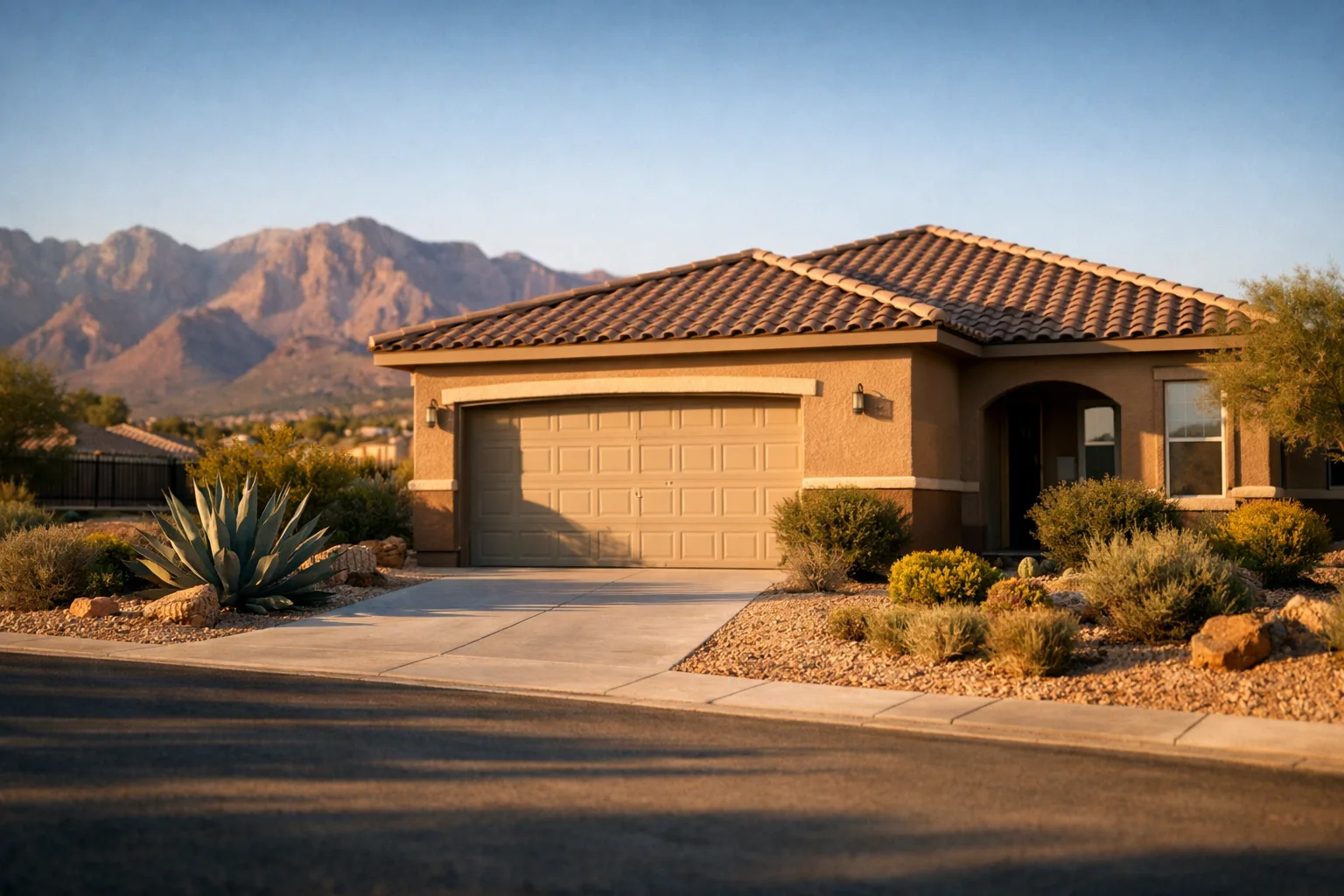
Disabled Veteran Property Tax Exemption in Las Vegas, NV
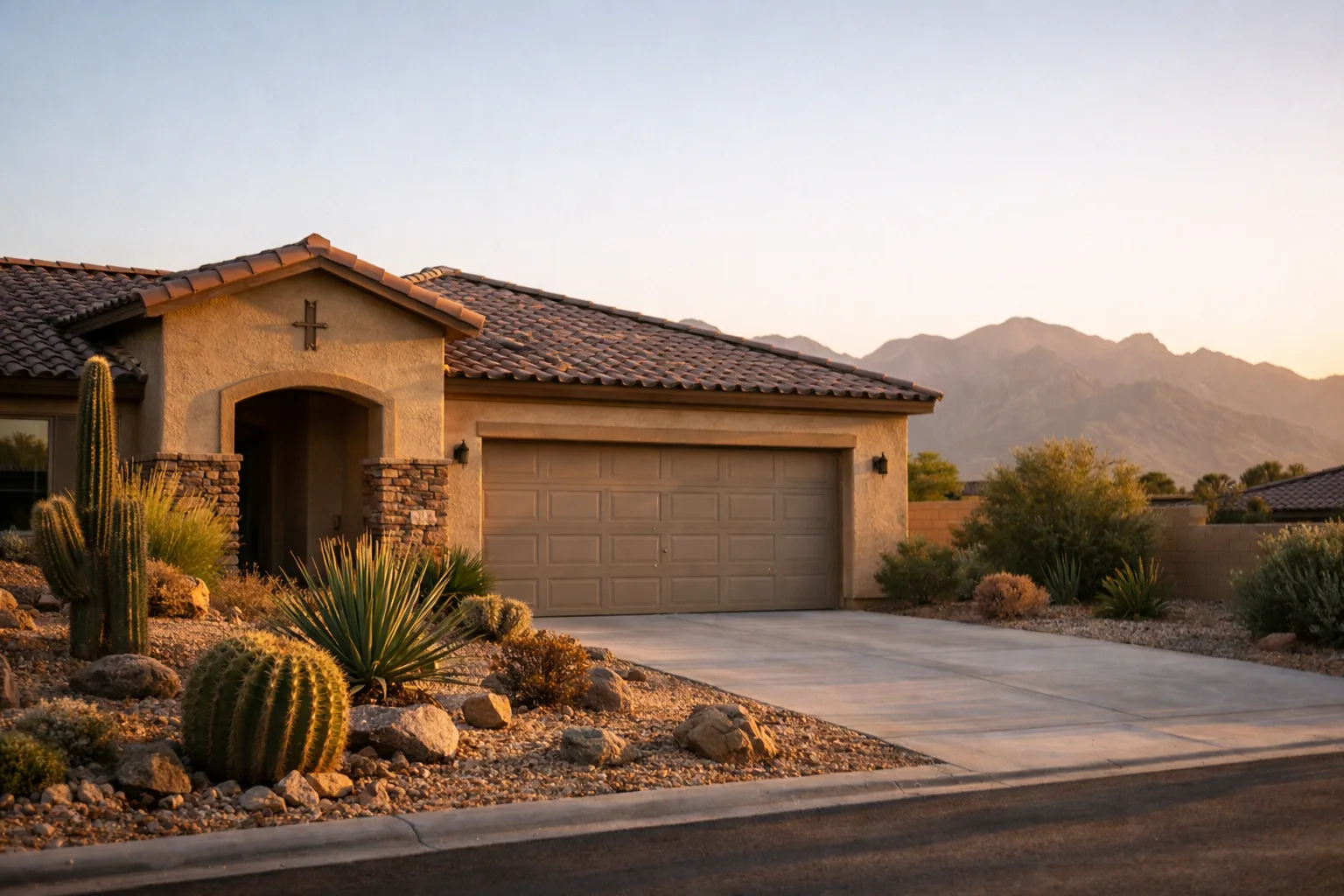
Moving to Las Vegas: Tax Savings After Homeownership Costs

Las Vegas Housing Market September 2026: Buyer Leverage