Is Las Vegas a Good Place to Live? Climate, Costs and Daily Life
Las Vegas offers warm winters, no state income tax, newer master-planned communities, and easy access to desert recreation, along with extreme summer heat and a car-oriented layout. This guide covers the lifestyle factors and costs to weigh before moving to Southern Nevada.
Las Vegas is a good fit if you value sunshine, convenient entertainment, newer housing, and a location within driving distance of desert recreation, mountains, lakes, and major Southwest destinations. It can feel like a harder adjustment if you want four distinct seasons, a walkable daily routine, historic neighborhoods, or a low-stimulation environment.
A successful move to Las Vegas, Henderson, Summerlin, North Las Vegas, or another Southern Nevada community depends less on the city's visitor image and more on day-to-day priorities. Climate tolerance, transportation, HOA preferences, taxes, recreation, and proximity to work all shape life in the Las Vegas Valley.
What Living in Las Vegas Is Really Like
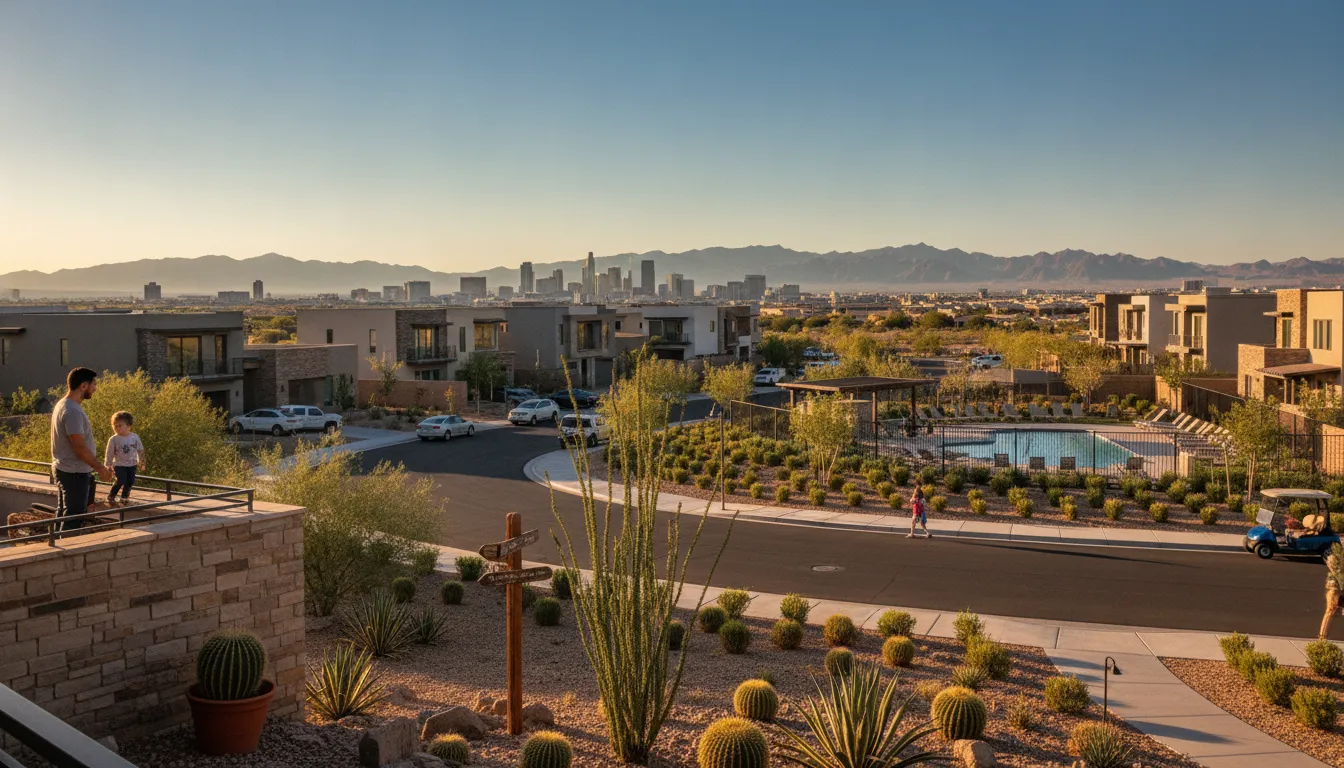
Most local life happens well beyond the Strip. Residents spend their time in suburban neighborhoods, master-planned communities, parks, restaurants, recreation facilities, employment centers, and shopping districts spread throughout the valley. Areas such as Summerlin, Green Valley, Inspirada, Centennial Hills, Southern Highlands, and Mountains Edge offer distinctly different housing styles and commute patterns.
At the same time, the region is a desert metro area built largely around automobiles. Its advantages and limitations both come from that setting: bright skies, dry heat, mountain views, wide roadways, water-conscious landscaping, air-conditioned indoor spaces, and frequent HOA governance.
Lifestyle Priorities That Fit Las Vegas Well
Entertainment and an Active City Calendar
Las Vegas offers unusual access to professional sports, concerts, comedy, major events, restaurants, galleries, and live performances. The Golden Knights, Raiders, Aces, residencies, Formula 1 events, and venues such as Sphere keep the calendar changing.
Local entertainment is not limited to the Strip. The Arts District, Fremont East, Chinatown, Desert Shores, Downtown Summerlin, and other districts offer dining and social options away from the main resort corridor. First Friday in the Arts District is a recurring gathering centered on local artists, food vendors, galleries, and music.
Mild Winters and No State Income Tax
Nevada does not impose an individual state income tax. That can matter to anyone with pension income, retirement-account distributions, or Social Security benefits, particularly when comparing a move from a higher-tax state. Tax circumstances vary, so evaluate your complete financial position before relocating. The Nevada Department of Taxation provides statewide tax information and resources.
Winter weather is another factor. Southern Nevada generally offers mild daytime conditions during the cooler months, without the routine snow and ice found in many northern markets. If you enjoy golf, walking, daytime outings, and outdoor recreation in winter, this climate is a real advantage.
Age-restricted communities add another option. Sun City Summerlin, for example, includes thousands of homes, community facilities, resident clubs, golf courses, and organized activities. These communities can reduce how far you travel for recreation, although you should carefully review age requirements, HOA fees, resale rules, amenities, and governing documents before purchasing. For a detailed comparison of active-adult options across the valley, see our guide to Las Vegas 55+ communities compared by cost, location, and lifestyle. You can also browse 55+ community homes currently listed in Las Vegas.
Outdoor Recreation for Those Who Plan Around the Heat
The Las Vegas Valley has direct access to desert and mountain recreation. Red Rock Canyon, Mount Charleston, Valley of Fire, Lake Mead, hiking trails, climbing areas, golf course communities, and scenic drives are all within reach of the metro area. Lake Mead is a major regional destination for boating, fishing, and shoreline recreation, with current visitor information available from the National Park Service's Lake Mead National Recreation Area page.
Mount Charleston and Lee Canyon offer a cooler change of scenery at higher elevation. In summer, mountain temperatures can feel very different from the valley floor. In winter, Lee Canyon provides nearby skiing and snowboarding, though it is not comparable in size or terrain to large destination ski resorts.
Southern Nevada also works well as a road-trip hub. Zion, Bryce Canyon, the Grand Canyon, Death Valley, Joshua Tree, the California coast, and other Western destinations are reachable by car for weekend trips, depending on the route and traffic.
Year-Round Golf Access
Golf is woven into many parts of Las Vegas living. The valley has numerous public courses, private clubs, resort courses, and golf-centered communities. TPC Summerlin, Las Vegas Paiute, Shadow Creek, Southern Highlands, Rhodes Ranch, and Sun City Summerlin are among the recognizable local names.
Spring, fall, and winter are the most comfortable seasons for local golf. Summer rounds take more planning because daytime heat can become severe. Early tee times, water, sun protection, and realistic expectations about heat exposure are essential. Some courses also price rounds differently by time of day and season.
Comparing Costs With Higher-Cost Western Markets
Households relocating from parts of California often compare Southern Nevada favorably on state income tax, housing options, and the amount of space a budget can buy. Summerlin and Henderson are frequent starting points for buyers who want master-planned amenities, established commercial areas, and access to the 215 Beltway.
For a sense of current pricing, homes in Las Vegas sold at a median of about $433,000 last month and took roughly 28 days to sell, while Henderson's median sold price was about $505,000. Those figures shift monthly, so treat them as a snapshot rather than a forecast.
Affordability should never be reduced to the purchase price. A realistic comparison includes mortgage payment, property taxes, HOA dues, homeowners insurance, utilities, commuting costs, maintenance, and potential special assessments. Home searches through Las Vegas real estate resources can help you compare available homes throughout the valley. Before you commit, it's also worth reviewing the 7 costly mistakes to avoid before moving to Las Vegas.
Lifestyle Factors That Take More Adjustment
Four Seasons and Summer Outdoor Time
Las Vegas has a hot desert climate. Summer heat is not a short inconvenience. Extended periods of triple-digit temperatures shape daily schedules from late spring into early fall. Yard work, walks, outdoor dining, exercise, and errands often shift to early morning or evening.
Air conditioning is a core household need, not an occasional comfort. Pay attention to a home's insulation, window condition, HVAC age, shade exposure, pool equipment, and monthly utility history when available. Desert landscaping can reduce water use and maintenance, but it does not create the greenery or seasonal changes found in wetter regions.
Communities such as Summerlin and Green Valley may feel more landscaped than many other parts of the valley, while Boulder City has a different small-city setting and some established vegetation. Still, every part of the region sits within the Mojave Desert environment.
A Quieter, Lower-Stimulation Environment
Casinos, gaming, alcohol service, nightlife, and high-energy entertainment are embedded in the local economy. Gaming machines appear in places that would not include them in many other cities, including convenience stores, grocery stores, bars, and taverns. Some movie theaters, bowling venues, and entertainment facilities are located within casino properties.
Many residents live routine suburban lives with little time spent on the Strip. Even so, if you want a setting with minimal gaming and nightlife around you, weigh that during your search. Location can help, but it cannot fully remove the broader presence of gaming and nightlife from the area.
Historic Character
Las Vegas was founded in 1905 and developed rapidly in the twentieth century. Its identity is built more around reinvention than preserved historic districts. Buildings, resorts, brands, and commercial corridors can change quickly, which appeals to anyone who enjoys new openings and evolving experiences.
Southern Nevada does have cultural institutions and historic points of interest, including the Neon Museum, the Mob Museum, the Smith Center, downtown Las Vegas, and the Arts District. Yet if you're looking for colonial architecture, centuries-old residential streets, dense traditional downtown neighborhoods, or an old-world urban fabric, the region may feel less satisfying than older East Coast or Midwest cities.
Living Without a Car
Driving is the practical default in most of Southern Nevada. The I-15, U.S. 95, Interstate 11, and the 215 Beltway connect major sections of the valley, while daily errands usually require a vehicle. A grocery store, restaurant, appointment, park, or friend's home may be physically close but separated by wide roads, major intersections, or limited pedestrian connections.
The Arts District, Fremont East, Downtown Summerlin, and some parts of the Strip offer more walkable experiences. These areas work well if you prioritize dining, shopping, and entertainment within a compact district. They do not represent the typical suburban daily pattern found across most of Las Vegas, Henderson, Enterprise, Spring Valley, and North Las Vegas.
Ride-share services can reduce the need to drive for some households, but relying on them for all routine transportation means budgeting for frequent trips and choosing a location with convenient access to services.
How HOA Communities Shape Las Vegas Homeownership
HOAs are common throughout the Las Vegas Valley, especially in newer master-planned communities. They can maintain common areas, landscaping, community facilities, gates, and neighborhood appearance. If you prefer a consistent streetscape and access to amenities, an HOA can be a positive feature.
For others, the same rules can feel restrictive. HOA governing documents may regulate exterior paint, landscaping, parking, visible storage, signs, exterior improvements, holiday displays, home-based business activity, and the storage of RVs, boats, or trailers. An architectural review process may be required before exterior work begins.
HOA Due Diligence Checklist for Southern Nevada Buyers
Review the monthly or quarterly HOA fee and identify what it covers.
Read the CC&Rs, bylaws, and rules before removing contingencies.
Ask about special assessments, pending litigation, reserve funding, and rental restrictions.
Confirm parking and storage rules for work vehicles, RVs, boats, trailers, and garage use.
Check architectural requirements before planning solar panels, landscaping, additions, exterior paint, or shade structures.
Compare community amenities with actual use so the fee matches your priorities.
Older areas of Las Vegas, portions of North Las Vegas, parts of East Las Vegas, and Boulder City may offer more homes without HOA restrictions. If that flexibility matters to you, browse no-HOA homes in Las Vegas to see what's currently available. Those options can involve different tradeoffs, including older construction, fewer shared amenities, and greater variation in home condition and streetscape.
How to Choose the Right Area of the Las Vegas Valley
Neighborhood selection should begin with daily routines rather than a broad city label. Commute needs, housing type, outdoor access, HOA preferences, lot size, and proximity to amenities usually matter more than distance from the Strip.
Questions to Answer Before Narrowing the Search
What is the maximum comfortable commute to work, healthcare, or frequent appointments?
Is a master-planned community and HOA desirable, acceptable, or a dealbreaker?
Would a condo, townhome, single-story home, or larger detached property best fit your maintenance needs?
How much summer heat exposure is realistic for work, pets, exercise, gardening, and recreation?
Would a walkable district be worth a smaller home, different price point, or less private outdoor space?
Which expenses need to be included beyond the mortgage payment?
For example, if you prioritize Red Rock access, newer development, and retail convenience, you may focus on Summerlin or Skye Canyon. If you want access to Henderson employment areas, established shopping, and master-planned amenities, you may compare Green Valley, Inspirada, Anthem, or Cadence. If you want more flexibility and a less uniform neighborhood feel, you might investigate older parts of the valley or Boulder City. Our guide to the best Las Vegas suburbs compares these communities side by side.
Common Mistakes When Moving to Las Vegas
Treating a short visit as a realistic test of daily life. A brief winter trip does not reveal summer utility use, heat limitations, traffic patterns, or neighborhood routines.
Underestimating cooling costs. Home size, insulation, sun exposure, HVAC condition, pool equipment, and thermostat habits can affect summer expenses.
Choosing a neighborhood only for the home. A home should also be evaluated for commute routes, errands, medical access, road noise, and nearby development.
Ignoring HOA documents. Restrictions that seem minor during a showing can have a lasting effect on parking, landscaping, storage, and future improvements.
Assuming the Strip represents everyday Las Vegas. Most residential life happens in neighborhood commercial centers, parks, community facilities, and suburban corridors.
Expecting a walkable lifestyle in a car-oriented area. If daily walking is a priority, focus your search on the limited districts that support it.
Bottom Line: Is Las Vegas the Right Place to Live?
Las Vegas is often a strong match if you appreciate warm winters, entertainment, desert landscapes, golf, newer communities, road-trip access, and Nevada's lack of individual state income tax. It can be less suitable if you depend on four seasons, historical character, public transit, extensive walkability, or distance from gaming and nightlife.
The best relocation decision comes from matching a neighborhood to your practical routines. A clear review of climate, commuting, HOA rules, carrying costs, recreation preferences, and long-term lifestyle priorities can make the difference between enjoying the Las Vegas Valley and feeling out of place in it.
Frequently asked questions
Is Las Vegas too hot to live in year-round?
Do most Las Vegas homes have an HOA?
Can residents live in Las Vegas without a car?
Is Las Vegas a good place for retirement?
What should California buyers consider before moving to Las Vegas?
Market figures in this article update automatically. Based on information from the Las Vegas REALTORS® Multiple Listing Service for the period September 1, 2026 through September 30, 2026.
Homes for sale in Las Vegas, Nevada
Thinking about a move to Las Vegas?
Browse every home for sale across the valley — Summerlin, Henderson, 55+ communities, high-rise condos, new construction and more — updated every few minutes. Or talk to a local agent who knows the neighborhoods.
Las Vegas, Nevada housing market
A quick read on what homes are doing in Las Vegas right now — pulled live from the MLS.
Based on information from the Las Vegas REALTORS® Multiple Listing Service for the period September 1, 2026 through September 30, 2026.
Keep reading
More from the blog
What Zillow Housing Data Means for Las Vegas Buyers and Sellers
Las Vegas Housing Market: National Rankings vs. Local Sales Reality

Las Vegas 55+ Communities Compared: Costs, Locations & Lifestyle