Is Summerlin Worth the Cost? Housing, HOAs and Daily Life
Summerlin offers trails, shopping and a coordinated master-planned setting, but it often comes with higher prices and layered HOA costs. We walk through the full ownership budget, amenities, commutes and trade-offs so you can decide if the premium fits your routine.
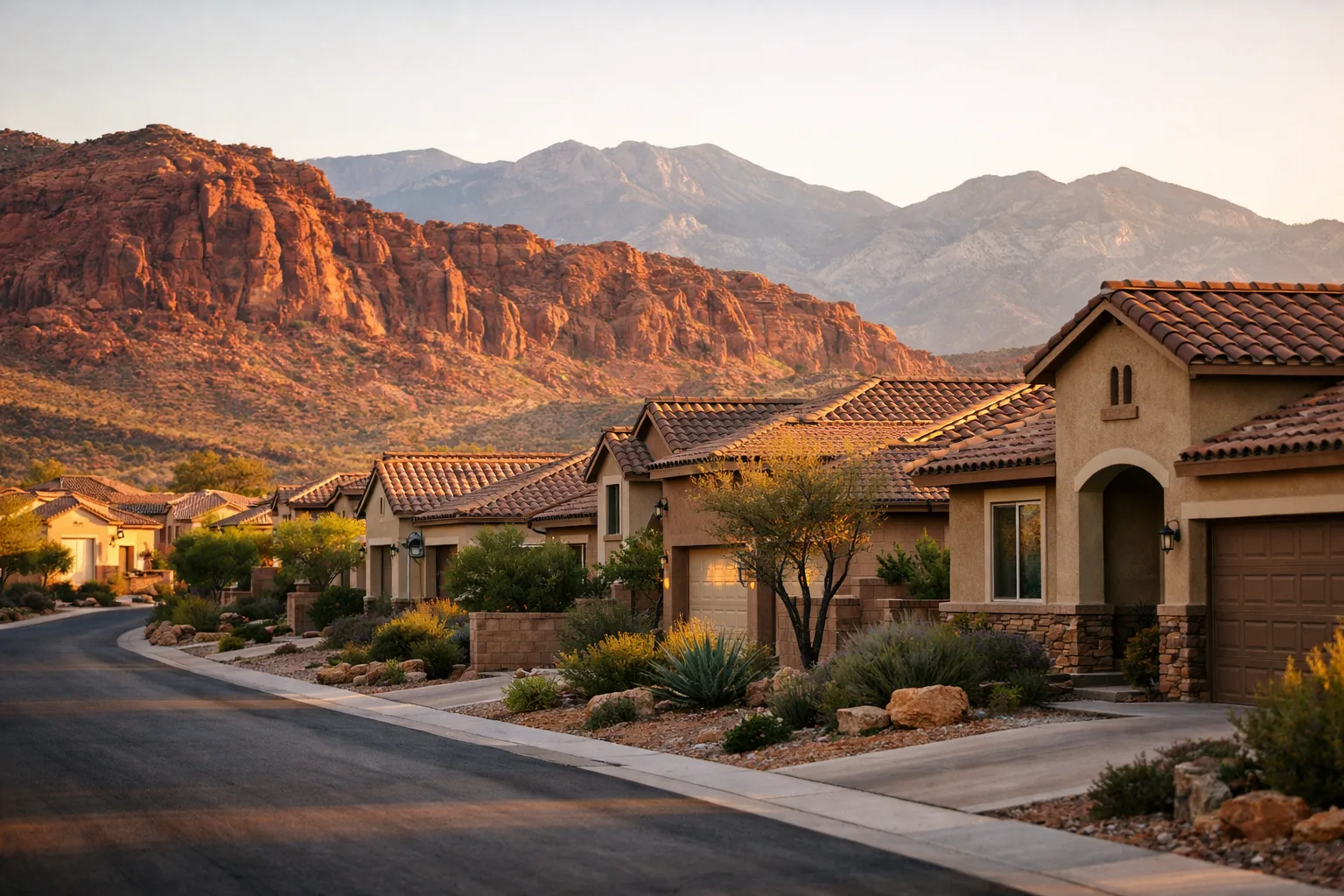
Summerlin offers planned neighborhoods, outdoor recreation, shopping and varied housing on the western side of the Las Vegas Valley. The trade-off is a generally higher purchase price, ongoing HOA expenses and less freedom over exterior changes than some buyers prefer.
Summerlin can be worth the premium for buyers who regularly use its amenities and value a coordinated community environment. Buyers focused mainly on purchase price, unrestricted property use or frequent trips to the Strip and airport may find those same benefits less compelling. The decision depends on the individual neighborhood, the full ownership budget and daily travel needs, not simply the Summerlin name.
What Makes Summerlin Different From Other Las Vegas Communities?
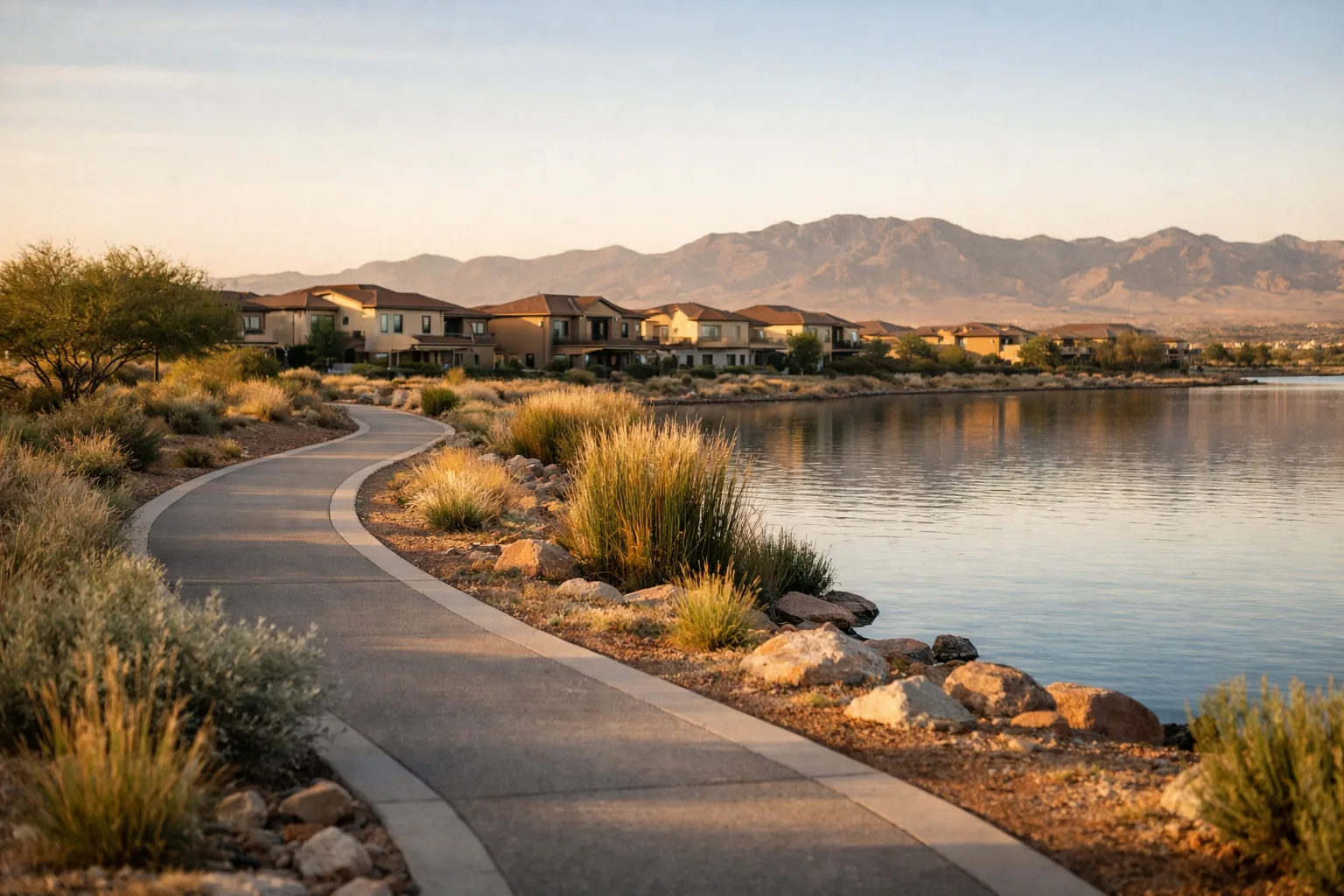
Summerlin is a large master-planned community organized into villages and smaller neighborhoods. Parks, walking and biking trails, recreation facilities and commercial destinations support its residential areas. That planning gives buyers more to evaluate than the floor plan and lot size alone.
The community includes Summerlin North, Summerlin South and Summerlin West. Housing ranges from condominiums and townhomes to detached homes, luxury estates and guard-gated properties. Established streets and newer developments feel noticeably different, even within the same broader section. You can browse current homes for sale in Summerlin to see that range for yourself.
Summerlin began developing in the early 1990s, with the Hills among its first villages. That history helps explain the contrast between mature neighborhoods in the older sections and the newer homes, landscaping and active building areas farther west.
Summerlin North, South or West: Which Differences Matter?
A useful Summerlin home search starts with the surrounding environment and daily destinations. The three sections are a starting point, but individual neighborhoods still need separate comparisons.
| Area | General characteristics | Key buying considerations |
|---|---|---|
| Summerlin North | Established, older homes, mature landscaping | Condition, renovation needs, HOA structure |
| Summerlin South | Mix of housing styles and established areas | Distance to amenities, fees by subdivision |
| Summerlin West | Newer homes, near Red Rock Canyon | Nearby construction, young landscaping, gated costs |
Newer does not automatically mean better, and established does not automatically mean less expensive to own. A newer property may better match your layout preferences, while an older neighborhood may offer the landscape maturity you value more. The strongest comparison weighs the home and its immediate surroundings together.
The Ownership Budget: Purchase Price Is Only the Beginning
The Summerlin location can carry a premium
Homes in Summerlin generally command higher prices than comparable options in many other parts of the Las Vegas Valley. Location, access to amenities and the master-planned setting all contribute. For a citywide benchmark, homes in Las Vegas sold for a median of about $430,823 last month, so it helps to compare similar property types and features rather than treating every Summerlin listing as equivalent.
A practical comparison holds the major housing requirements steady: square footage, bedroom count, garage capacity, lot size, age and condition. That makes it easier to separate the cost of the house itself from the premium tied to its location.
Available Las Vegas real estate listings can help you build a comparison set across Summerlin and other valley locations. Weigh asking prices alongside condition, community expenses and the amenities attached to each property.
HOA costs may have more than one layer
Summerlin homes generally involve master-association dues, and some properties also carry neighborhood or sub-association fees. Gated communities in Summerlin and guard-gated neighborhoods may add expenses for their services and amenities. Condominium and townhome comparisons also require careful attention to what the association maintains.
A quoted master-association fee should not be assumed to represent the entire HOA obligation. Get the current fee schedule for the specific property and identify each association involved. Fees vary, so a figure from another neighborhood may not apply.
- Master-association dues: Identify the applicable association and current payment schedule.
- Neighborhood dues: Confirm whether a separate subdivision association charges additional fees.
- Services included: Determine which amenities and maintenance responsibilities the dues cover.
- Owner responsibilities: Separate association-maintained areas from items the homeowner must maintain.
Desert homeownership costs still matter
Summerlin's amenities do not replace a property-level ownership budget. Account for financing, property taxes, insurance, utilities and maintenance. Also ask whether the property carries any special improvement district assessments. Nevada has no state income tax, but that does not mean ownership is cheap, and our guide to tax savings after homeownership costs walks through what remains. In Southern Nevada, air-conditioning performance, solar exposure, outdoor shade and landscaping upkeep deserve particular attention.
A lower purchase price does not settle the affordability question if the home needs substantial work or has higher ongoing expenses. Likewise, a higher-priced home is not necessarily the better value simply because it is newer or in a gated subdivision.
Which Summerlin Amenities Add Real Everyday Value?
Summerlin's amenities are most useful when they support activities you actually pursue. A household that regularly uses trails, recreation facilities and nearby dining may place more value on the location than one whose daily activities happen elsewhere in the valley.
Parks, trails and community recreation
A substantial network of walking and biking trails, parks, playgrounds and open spaces is central to Summerlin's appeal. Community centers, pools and fitness facilities add recreation options. The practical benefit depends on how close those facilities are to a particular home and which are available through its community arrangements.
Inspect the nearest trail connections and park access rather than relying on a community-wide amenity list. A facility that looks close on a map may still require a drive or a route that does not match your preferred routine.
Shopping, dining and entertainment
Major destinations include Downtown Summerlin, Red Rock Casino Resort and Spa, Las Vegas Ballpark and City National Arena. Costco and other shopping options add everyday convenience, while golf courses throughout the community broaden its recreation choices.
These destinations allow residents to enjoy dining and entertainment without making every outing a trip to the Strip. However, Summerlin covers a large area. Being within the community does not mean every attraction is within walking distance or a short drive of every property.
Access to Red Rock Canyon
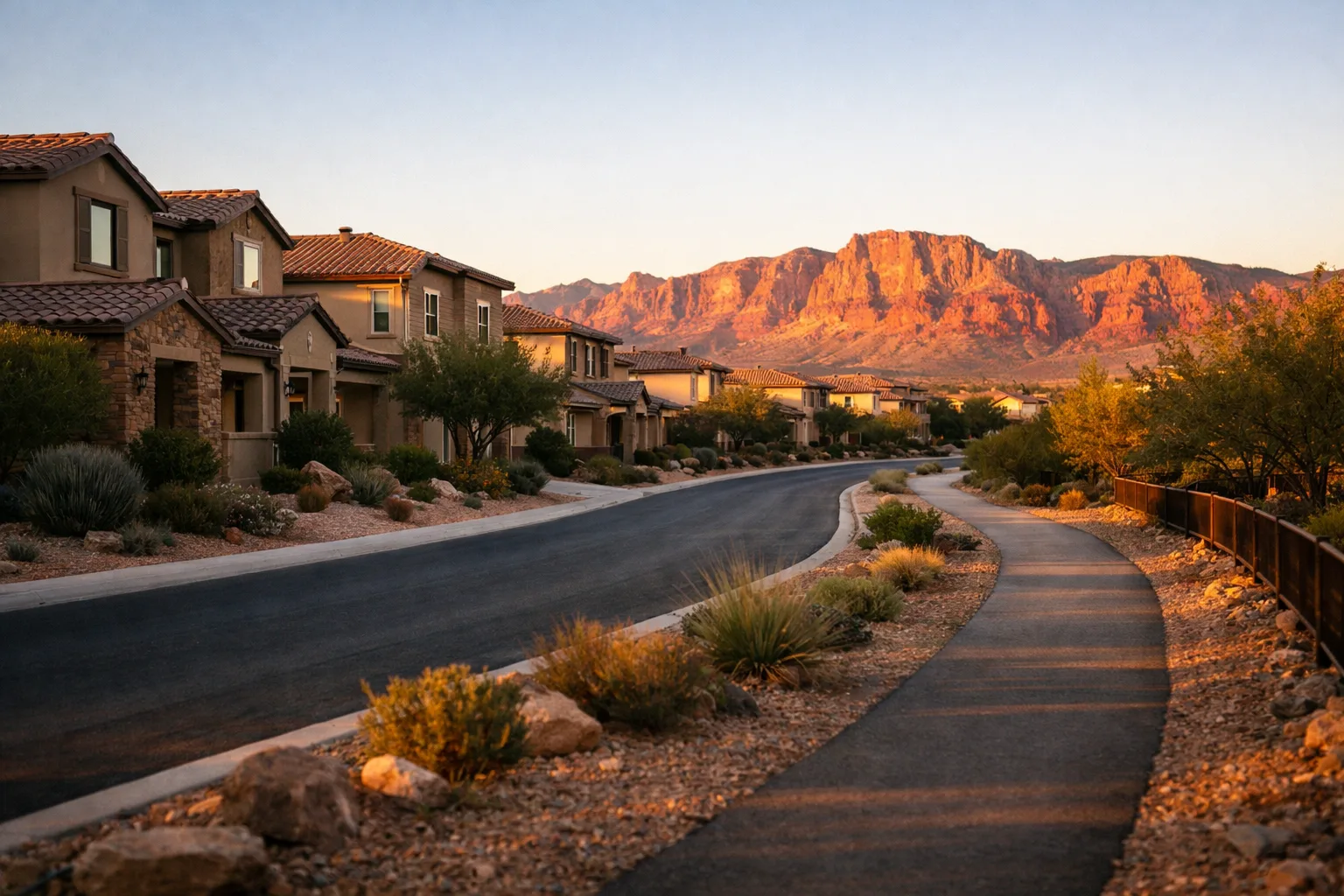
Proximity to Red Rock Canyon National Conservation Area is one of Summerlin's most distinctive advantages. Hiking, biking, scenic drives and desert scenery provide a different experience from the valley's urban entertainment areas. Summerlin West is particularly relevant for buyers who prioritize access to that side of the community.
The Bureau of Land Management's Red Rock Canyon information provides official visitor guidance for planning outings. Evaluate the access a property has today rather than assuming a proposed trail connection or future improvement is already available.
How Summerlin's Climate and Commutes Affect Daily Life
Some areas feel cooler, but summer heat remains
Summerlin's western location and higher elevations can make some neighborhoods cooler than lower parts of the Las Vegas Valley. That difference may improve outdoor comfort at certain times, particularly in the higher western areas. It should not be treated as a uniform temperature advantage across every neighborhood.
Summerlin still has a desert climate with significant summer heat. Evaluate shade, window exposure and cooling equipment instead of assuming the location eliminates high-temperature concerns. Check outdoor areas at the times you are most likely to use them.
The Strip and airport require a realistic travel test
Summerlin's distance from the main tourist corridor appeals to residents who prefer separation from the Strip. The same distance can become a drawback for frequent airport trips or a work schedule centered on resort properties.
Travel time varies by the home's location, departure time, traffic and construction. Access to the 215 Beltway and Summerlin Parkway can influence route choices, but a broad community-level estimate is not a reliable substitute for testing the actual trip.
- Check travel from the specific property to the workplace during the relevant shift hours.
- Compare airport routes at the times flights are typically scheduled.
- Test the trip to frequently used shopping, recreation and healthcare destinations.
- Account for current roadwork rather than relying only on an ideal traffic estimate.
Two Trade-Offs That Deserve a Closer Look
HOA standards can limit personal preferences
Coordinated landscaping and maintained common areas contribute to Summerlin's appearance. The associated rules can also limit exterior paint choices, landscaping changes, parking arrangements and home modifications.
If you value visual consistency, you may welcome those standards. If you expect broad freedom to change the property, you may find them restrictive. Neither should be assumed from the appearance of a home alone.
Before committing to a property, review the governing documents and approval procedures for the changes you anticipate. An explanation of HOA bylaws and CC&Rs provides useful terminology, while the actual Summerlin association documents determine the property's requirements.
New construction can come with an unfinished setting
Summerlin West offers newer housing, and you can see what is currently available in new construction in Summerlin. Active development can bring construction noise, truck traffic, dust and less mature landscaping. Nearby road improvements may also affect access while work is underway. These conditions can differ substantially between completed neighborhoods and streets close to active building sites.
Examine adjacent land, nearby construction entrances and the route into the subdivision. Visits on different days can reveal conditions that are not apparent during a single appointment. Older portions of the west may have more established surroundings than newly opened areas.
The broader trade-offs between new construction and homes needing updates can help organize the housing comparison. Local decisions still depend on the specific home's condition, price and neighborhood setting.
Property Values: Appeal Does Not Guarantee Appreciation
Summerlin's amenities, housing variety and recognizable master-planned identity are reasons buyers consider the community. Those features do not guarantee that an individual property will appreciate or hold its value through every market cycle. Market pace also shifts: homes in Las Vegas are selling in a median of about 28 days right now, and that can look different from one neighborhood to the next.
Past gains in a particular development should not be treated as a forecast for another home. Purchase price, condition, financing, holding period and competing listings all matter. Long-term investors also need to evaluate rental restrictions and operating expenses rather than relying on location alone.
A sound purchase should work under your current budget without depending on future appreciation. The community premium is easier to assess when its lifestyle benefits are separated from assumptions about resale returns.
A Practical Checklist Before Buying in Summerlin
- Define the location benefit. Identify the trails, destinations or neighborhood features that justify considering Summerlin.
- Compare at least two settings. Evaluate an established neighborhood against a newer area when both meet the housing requirements.
- Build the complete monthly budget. Include every applicable HOA fee alongside financing and other ownership expenses.
- Read the restrictions early. Check planned exterior changes, parking needs and intended property use before making assumptions.
- Test actual travel routes. Use the specific address and realistic departure times for work, airport and routine trips.
- Inspect the surroundings. Assess landscape maturity, nearby building activity, roadwork and existing recreation access.
- Compare similar homes outside Summerlin. Determine how much of the price difference reflects features you will actually use.
Summerlin's strongest case is the combination of housing choices, planned amenities and access to western-valley recreation. Its higher prices, association obligations and travel trade-offs are equally central to the decision. The best fit is a property whose immediate setting and total costs support your routine, not simply one with a Summerlin address.
Frequently asked questions
Is Summerlin worth the higher home price compared with other valley areas?
Do Summerlin homes have more than one HOA fee?
What is the main difference between Summerlin North and Summerlin West?
Is Summerlin cooler than other parts of Las Vegas?
What are the biggest drawbacks of living in Summerlin?
Market figures in this article update automatically. Based on information from the Las Vegas REALTORS® Multiple Listing Service for the period September 1, 2026 through October 19, 2026.
Homes for sale in Las Vegas, Nevada
Thinking about a move to Las Vegas?
Browse every home for sale across the valley — Summerlin, Henderson, 55+ communities, high-rise condos, new construction and more — updated every few minutes. Or talk to a local agent who knows the neighborhoods.
Las Vegas, Nevada housing market
A quick read on what homes are doing in Las Vegas right now — pulled live from the MLS.
Based on information from the Las Vegas REALTORS® Multiple Listing Service for the period September 1, 2026 through October 19, 2026.
Keep reading
More from the blog
Living in Skye Canyon: A Northwest Las Vegas Buyer's Guide
North Las Vegas Home With Solar: What to Verify Before Closing
Moving From California to Las Vegas: Costs, Taxes and Daily Life